
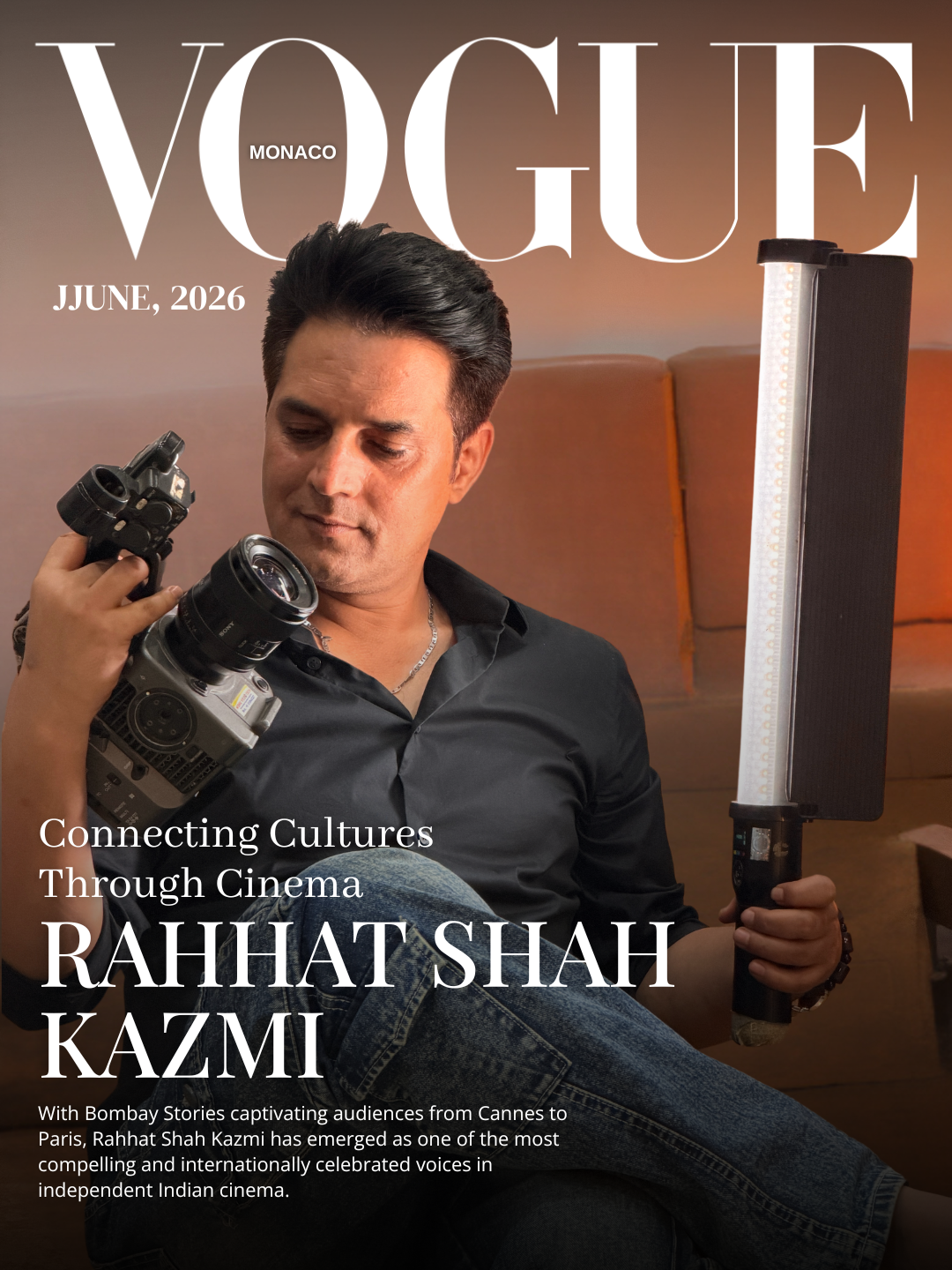
From Kashmir to Cannes, Paris, Seoul, and Hollywood, Rahhat Shah Kazmi has built a remarkable global career through the power of storytelling.
In an era when success in cinema is often measured by box office numbers and social media visibility, Rahhat Shah Kazmi has followed a different path.
He has spent more than two decades building his reputation through stories.
Not stories designed around trends or formulas, but stories rooted in human emotions, literature, culture, and the experiences that connect people across borders. Through patience, persistence, and an unwavering belief in meaningful cinema, he has emerged as one of the most internationally recognized independent filmmakers working today.
The success of his latest film, Bombay Stories, has brought renewed attention to a journey that has quietly unfolded across continents. After a sold out World Premiere at the Cannes Film Festival and a Best Feature Film victory at the Paris Film Awards, Kazmi’s work is reaching a wider audience than ever before.
For many filmmakers, such achievements would represent the peak of a career.
For Rahhat Shah Kazmi, they represent the continuation of a lifelong commitment to storytelling.
A Career Built on Conviction

There are filmmakers who adapt themselves to the industry.
Then there are filmmakers who build their own path.
Rahhat Shah Kazmi belongs to the latter.
Born in Jammu and Kashmir, he developed a fascination with stories at an early age. Growing up in a region defined by cultural richness, history, and human complexity, he became deeply interested in the emotions and experiences that shape people’s lives.
Those early observations would later become the foundation of his work as a filmmaker.
Rather than pursuing conventional routes to success, Kazmi chose to create films that reflected authentic human experiences. His stories focused on identity, resilience, relationships, memory, belonging, and emotional survival.
Over time, that commitment to authenticity became his greatest strength.
It also became the reason audiences around the world began paying attention.
Cinema Inspired by Literature
One of the defining features of Kazmi’s work is his deep relationship with literature.
Throughout his career, he has consistently drawn inspiration from some of South Asia’s most celebrated writers, bringing timeless stories and themes to contemporary audiences.
His acclaimed film Mantostaan introduced a new generation to the literary brilliance of Saadat Hasan Manto. The film explored humanity, conflict, and emotional truth through interconnected narratives that resonated far beyond national boundaries.
He followed this success with Lihaaf, inspired by the iconic work of Ismat Chughtai. The film received international acclaim and multiple awards, further establishing Kazmi as a filmmaker capable of transforming powerful literary works into compelling cinematic experiences.
For him, literature is not simply source material.
It is a guide.
A way of understanding society, exploring emotions, and preserving stories that remain relevant across generations.
Building a Global Reputation
Over the years, Rahhat Shah Kazmi’s filmography has continued to grow in both scale and impact.
Films such as Identity Card, Lines, Last Coffee, Wishlist, and Am I Next expanded his reputation as a filmmaker who combines artistic ambition with emotional accessibility.
His work has consistently explored important social and personal themes while remaining relatable to audiences from different cultures and backgrounds.
One of the most significant moments of his career arrived with Country of Blind.
The project attracted widespread international attention and achieved a rare distinction when its screenplay was acquired by the Academy Library in Los Angeles.
For an independent filmmaker, this recognition represented an extraordinary honor.
It confirmed that Kazmi’s storytelling had become part of a larger global conversation about cinema and culture.
The achievement remains one of the most important milestones in his career and further strengthened his standing within the international film community.
Connecting Cultures Through Cinema
Kazmi has never viewed cinema as something limited by geography.
Instead, he has embraced storytelling as a bridge between cultures.
That vision reached a new level with Love in Vietnam, a landmark collaboration between India and Vietnam that became one of the most significant cinematic partnerships between the two countries.
The film received widespread acclaim and demonstrated the possibilities of international collaboration through creative storytelling.
Its success earned Rahhat Shah Kazmi the prestigious Best Director of Asia honor at the Seoul Global Movie Awards, while the film itself received recognition as one of the region’s most celebrated productions.
The achievement further established him as a filmmaker capable of creating stories that transcend cultural and linguistic boundaries.
The Triumph of Bombay Stories

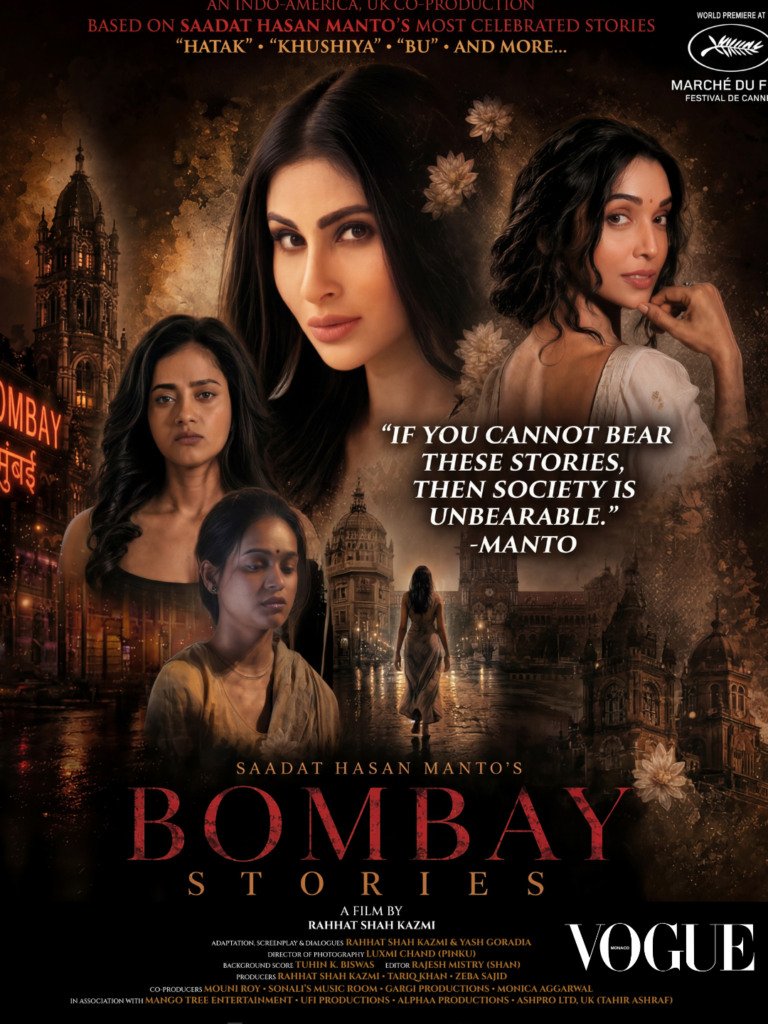
While every project has contributed to his growth, Bombay Stories has become one of the defining achievements of Rahhat Shah Kazmi’s career.
Inspired by the writings of Saadat Hasan Manto, the film explores loneliness, longing, dignity, desire, and emotional survival within contemporary Mumbai.
Rather than adapting a single story, Kazmi reimagines Manto’s themes for a modern audience, creating a narrative that feels both timeless and relevant.
The film stars Mouni Roy, Anupriya Goenka, and Sushmita Singh, whose performances bring remarkable emotional depth to the story.
At the center of the film are characters navigating loneliness, rejection, hope, and resilience. They are portrayed not as symbols or stereotypes, but as fully realized individuals whose experiences reflect universal human struggles.
This emotional authenticity became one of the film’s greatest strengths.
It also became one of the reasons audiences connected with it so deeply.
A Defining Moment at Cannes
The Cannes Film Festival premiere marked a turning point.
Long before the screening began, audiences gathered outside the venue in anticipation. The auditorium quickly filled to capacity, creating an atmosphere of excitement rarely associated with independent productions.
As the film unfolded, viewers responded with deep engagement and emotional investment.
Following the screening, discussions continued among critics, filmmakers, distributors, and festival delegates.
Many praised the film’s literary richness, visual storytelling, and emotional honesty.
Several described it as one of the most memorable Indian independent films presented at the festival.
The response confirmed what many of Kazmi’s longtime supporters had always believed.
His stories possessed the power to resonate with audiences anywhere in the world.
Recognition in Paris
The momentum generated at Cannes continued in Paris.
When Bombay Stories was awarded Best Feature Film at the Paris Film Awards, it transformed an already successful festival run into a landmark international achievement.
The recognition elevated the film’s global profile and further strengthened Rahhat Shah Kazmi’s reputation as a filmmaker whose work consistently connects with international audiences.
More importantly, it demonstrated that stories rooted in local realities can achieve universal relevance when told with honesty and conviction.
For Kazmi and his collaborators, the award represented years of dedication, creative risk taking, and belief in the value of meaningful cinema.
The Quiet Revolution

What makes Rahhat Shah Kazmi’s journey remarkable is not simply the awards he has received or the festivals he has attended.
It is the way he has achieved success.
Outside traditional studio systems.
Outside conventional industry formulas.
And without compromising the values that define his work.
His films continue to place humanity at the center of the cinematic experience.
They encourage empathy rather than division.
They ask questions rather than offer simple answers.
And they remind audiences that great cinema begins with understanding people.
Today, Rahhat Shah Kazmi stands among a select group of Indian independent filmmakers who have built a truly international identity while remaining deeply connected to their roots.
From the valleys of Jammu and Kashmir to the red carpets of Cannes, from the Academy Library in Los Angeles to award ceremonies in Seoul and Paris, his journey reflects the enduring power of storytelling.
As Bombay Stories continues to win audiences around the world and new projects move closer to completion, one thing is clear.
Rahhat Shah Kazmi’s story is far from finished.
In many ways, it feels as though the most exciting chapter is only just beginning.