
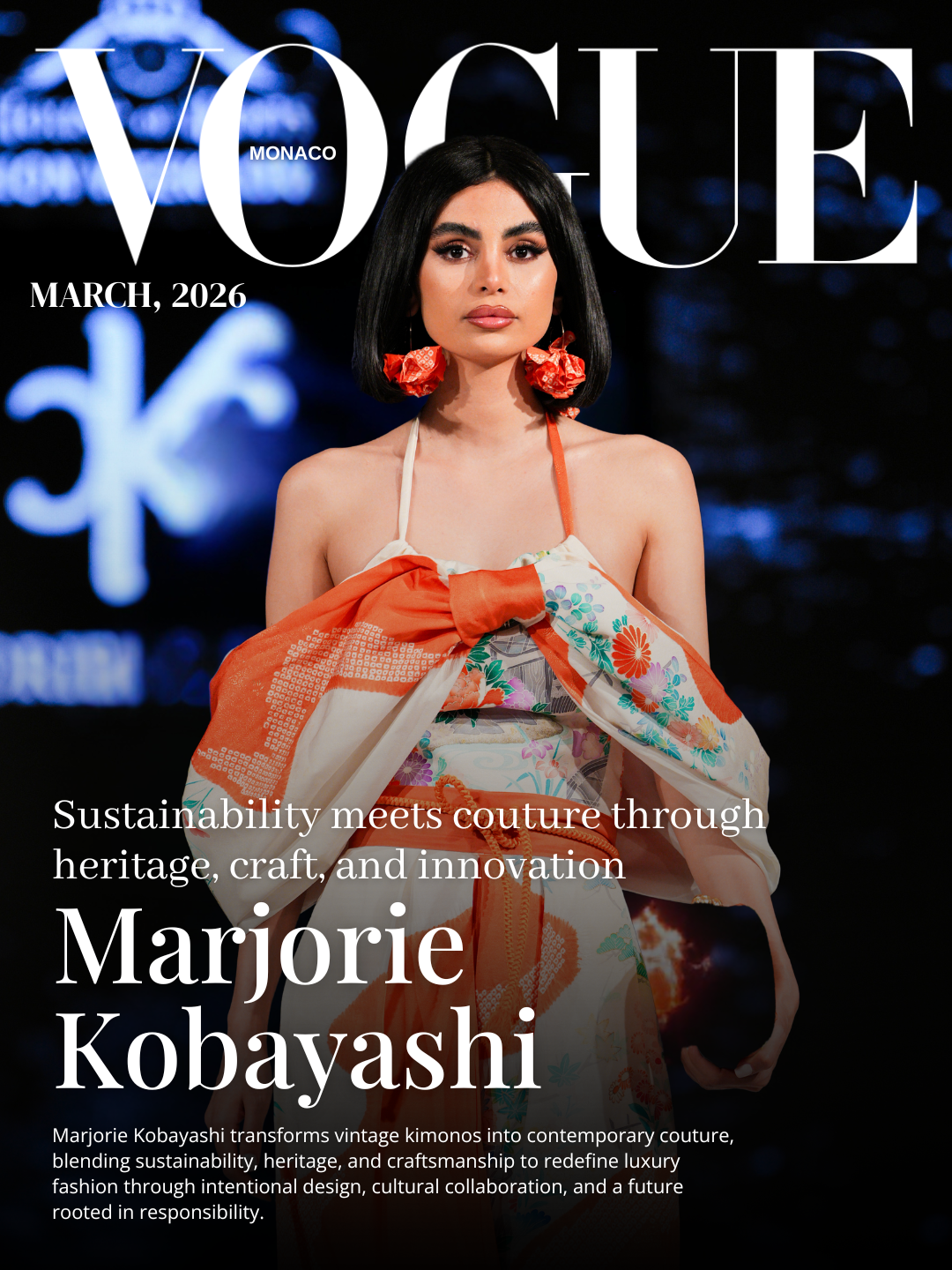
Rewriting the Language of Luxury
In an industry often defined by rapid production cycles and relentless reinvention, Marjorie Kobayashi emerges as a designer who challenges the very foundation of modern fashion. As the Founder and CEO of Cool Kimono Crafts, she has built a distinctive voice rooted not in excess, but in intention—where sustainability, heritage, and couture craftsmanship coexist with remarkable clarity.
Kobayashi’s work does not follow trends; it transcends them. At a time when many designers are racing toward futuristic aesthetics, she turns deliberately toward history, drawing from the cultural richness of traditional Japanese kimonos. Yet her approach is far from archival. Instead, she reinterprets these garments into contemporary forms that speak directly to today’s fashion landscape.
Her philosophy is grounded in a powerful idea: true luxury is not defined by novelty, but by meaning. Through this lens, Kobayashi is not merely creating garments—she is redefining what couture represents in a conscious, evolving world.
A Defining Moment at House of iKons
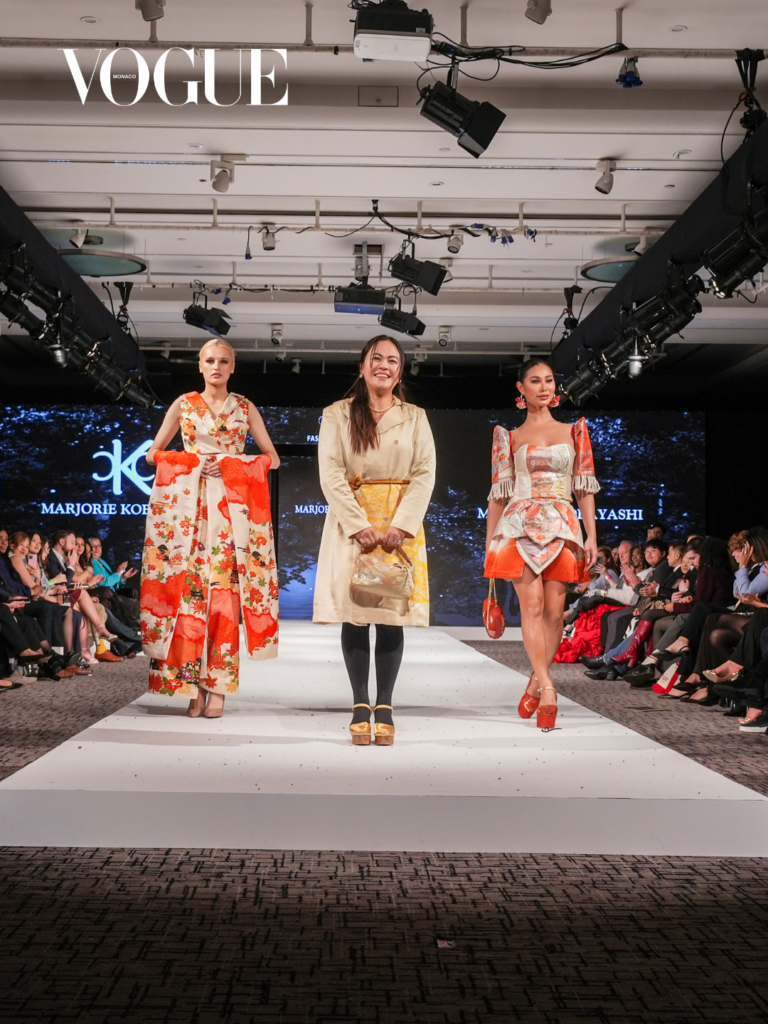
On 21 February 2026, Kobayashi presented her latest collection at House of iKons during Fashion Week London, held at the Leonardo Royal Tower Bridge. The event marked a significant milestone, not only for the designer but for the broader narrative of sustainable fashion within the global couture space.
Her runway presentation stood apart for its depth and intentionality. Each look carried a story, shaped by the history of the textiles and the precision of modern design. The collection showcased a range of silhouettes—from structured, sculptural eveningwear to fluid, expressive statement pieces—each unified by a shared commitment to craftsmanship and cultural integrity.
What distinguished Kobayashi’s showcase was its emotional resonance. These were not garments created for fleeting attention; they were designed to evoke reflection. The audience was invited to consider not only the aesthetic beauty of each piece but also its journey—from a traditional kimono to a contemporary couture creation.
In a setting often dominated by spectacle, Kobayashi offered something far more enduring: substance.
The Transformation of Heritage Textiles
At the heart of Kobayashi’s work lies a profound respect for heritage. Each piece begins with an authentic vintage kimono, a garment that carries its own history, symbolism, and craftsmanship. Rather than treating these textiles as raw materials, she approaches them as cultural artifacts—objects of significance that demand careful handling and thoughtful reinterpretation.
The transformation process is meticulous. Kimonos are deconstructed with precision, preserving the integrity of the fabric while allowing for new forms to emerge. The resulting designs are not mere adaptations; they are complete reinventions that retain the spirit of the original garment.
This balance between preservation and innovation defines Kobayashi’s aesthetic. Her pieces do not erase their origins; they amplify them. Patterns, textures, and motifs are recontextualized within modern silhouettes, creating garments that feel both timeless and contemporary.
In doing so, Kobayashi challenges a fundamental assumption within fashion—that progress requires abandonment of the past. Her work demonstrates the opposite: that the past can be a powerful foundation for the future.
Sustainability as Creative Discipline

While sustainability has become a widely discussed concept in fashion, Kobayashi treats it not as a trend, but as a discipline. Her commitment extends beyond surface-level gestures, embedding environmental responsibility into every stage of her creative process.
By utilizing vintage kimonos, she reduces the demand for new textiles, minimizing environmental impact while preserving existing materials. This approach not only addresses issues of waste but also highlights the enduring value of traditional craftsmanship.
Her designs further reinforce this philosophy. Each garment is constructed with intention, avoiding excess and prioritizing longevity. The result is a collection that resists disposability, encouraging a deeper connection between the wearer and the piece.
Kobayashi’s work raises an important question: what if sustainability were not seen as a limitation, but as a source of creative inspiration? In her hands, constraints become opportunities, leading to designs that are both innovative and responsible.
Zero Waste: A Philosophy in Practice
Central to Kobayashi’s approach is a commitment to zero waste—an ethos that transforms sustainability from an abstract ideal into a tangible practice.
Every fragment of fabric is accounted for. After the primary garments are constructed, remaining pieces of kimono textiles are repurposed into accessories and design elements. These may take the form of intricate embellishments, structural accents, or standalone items that carry the same level of craftsmanship as the main collection.
This meticulous use of materials reflects a broader philosophy of respect. Nothing is discarded; everything is valued. The process becomes not only an exercise in creativity but also an act of stewardship.
In an industry where waste is often normalized, Kobayashi’s zero-waste approach stands as a compelling alternative. It challenges designers to reconsider their relationship with materials and to explore the possibilities that emerge when every element is treated with care.
A Dialogue Between Cultures
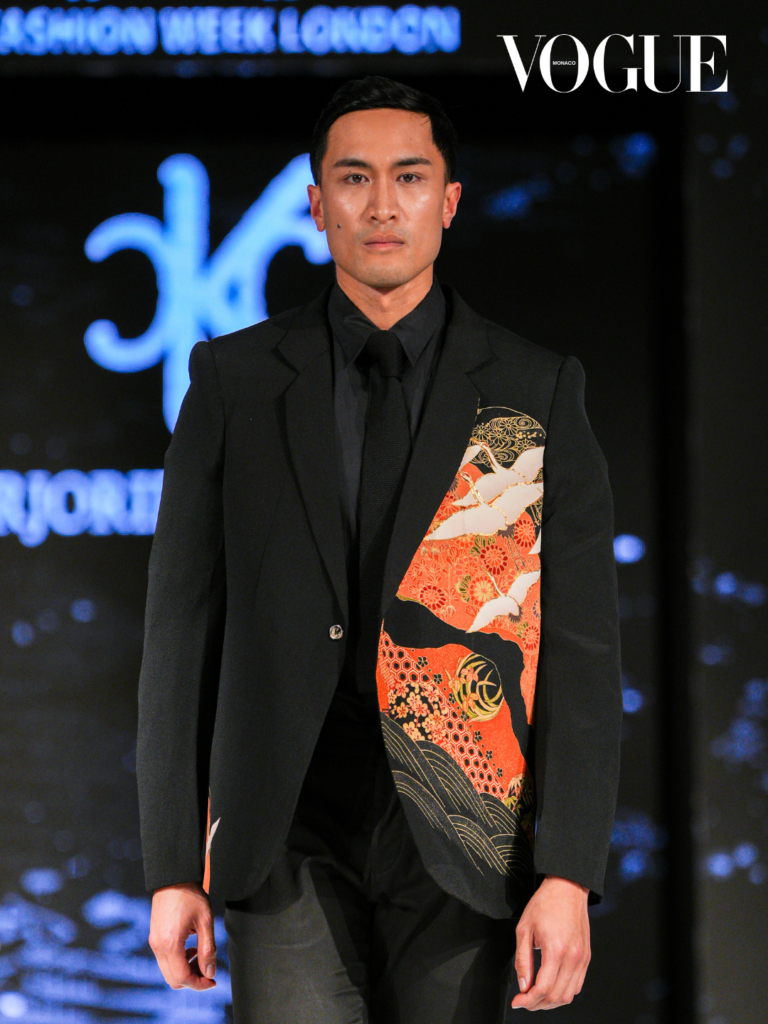
Kobayashi’s work is not confined to a single cultural context. Instead, it exists at the intersection of multiple traditions, brought together through collaboration and shared craftsmanship.
While the kimonos are sourced in Japan, their transformation takes place in the Philippines, where skilled artisans play a crucial role in the reconstruction process. This cross-cultural collaboration adds depth to each piece, blending Japanese heritage with Filipino artistry.
The result is a collection that embodies a global perspective while remaining deeply rooted in tradition. It reflects the interconnected nature of contemporary fashion, where ideas, techniques, and influences move fluidly across borders.
Importantly, this collaboration is grounded in mutual respect. The artisans involved are not merely executing designs; they are contributing their expertise and cultural knowledge to the creative process. In this way, Kobayashi’s work becomes a form of dialogue—one that celebrates diversity while fostering understanding.
The Intersection of Education and Design
Beyond her role as a designer, Kobayashi is also a university lecturer, a position that allows her to extend her influence beyond the runway.
In the classroom, she emphasizes the importance of intentional design, encouraging students to consider the broader impact of their work. Her teaching goes beyond technical skills, addressing issues of sustainability, cultural awareness, and ethical responsibility.
This dual role enhances her contribution to the fashion industry. As a designer, she creates garments that embody her philosophy. As an educator, she shapes the perspectives of future designers, instilling values that have the potential to transform the industry from within.
Kobayashi’s commitment to education underscores a key aspect of her vision: that lasting change requires not only innovation, but also knowledge and awareness.
Redefining Couture for a Conscious Era
Traditionally, couture has been associated with exclusivity, opulence, and excess. Kobayashi challenges this narrative, offering a new definition—one that aligns with the values of a more conscious generation.
In her work, couture becomes a space for storytelling, where each garment carries a narrative shaped by history, craftsmanship, and sustainability. The emphasis shifts from quantity to quality, from spectacle to substance.
Her designs invite a deeper engagement with fashion. They encourage wearers to consider not only how a garment looks, but what it represents—its origins, its journey, and its impact.
This redefinition reflects a broader shift within the industry. As consumers become more aware of environmental and ethical issues, the demand for meaningful fashion continues to grow. Kobayashi’s work meets this demand with authenticity, offering an alternative to conventional luxury.
A Vision That Extends Beyond the Runway

Marjorie Kobayashi’s presentation at House of iKons was more than a showcase—it was a statement of intent. It signaled a future where fashion is guided by values as much as aesthetics, where sustainability and couture are not opposing forces, but complementary ones.
Her work challenges both designers and consumers to rethink their approach to fashion. It encourages a move away from disposability and toward longevity, from superficial trends to enduring meaning.
At its core, her vision is one of balance. It seeks to harmonize tradition and innovation, artistry and responsibility, individuality and collaboration. In doing so, it offers a blueprint for a more thoughtful and sustainable fashion industry.
The Legacy of Intentional Design
In every piece she creates, Kobayashi leaves a trace of intention—a commitment to preserving the past while shaping the future.
Her work demonstrates that fashion can be more than a reflection of the present; it can be a bridge between generations, cultures, and ideas. It can honor heritage while embracing change, creating something that is both rooted and progressive.
As the industry continues to evolve, voices like Kobayashi’s become increasingly important. They remind us that true innovation lies not in constant reinvention, but in meaningful transformation.
Marjorie Kobayashi is not simply designing garments. She is redefining the role of fashion in a world that demands both creativity and responsibility.
And in doing so, she is shaping a future where sustainability is not an option, but a standard—and where couture becomes a language of purpose as much as beauty.
Credits: Event House of iKons Fashion Week London | CEO/Producer, Savita Kaye | HUMA/Sponsor, Samuel Mammone of MadeUpbySamuel | Staging, Ambassadors of Sound | Location, Leonardo Royal Tower Bridge London Hotel | Sponsor, The Fashion Life Tour | Images courtesy of Josh Rosales Photography