
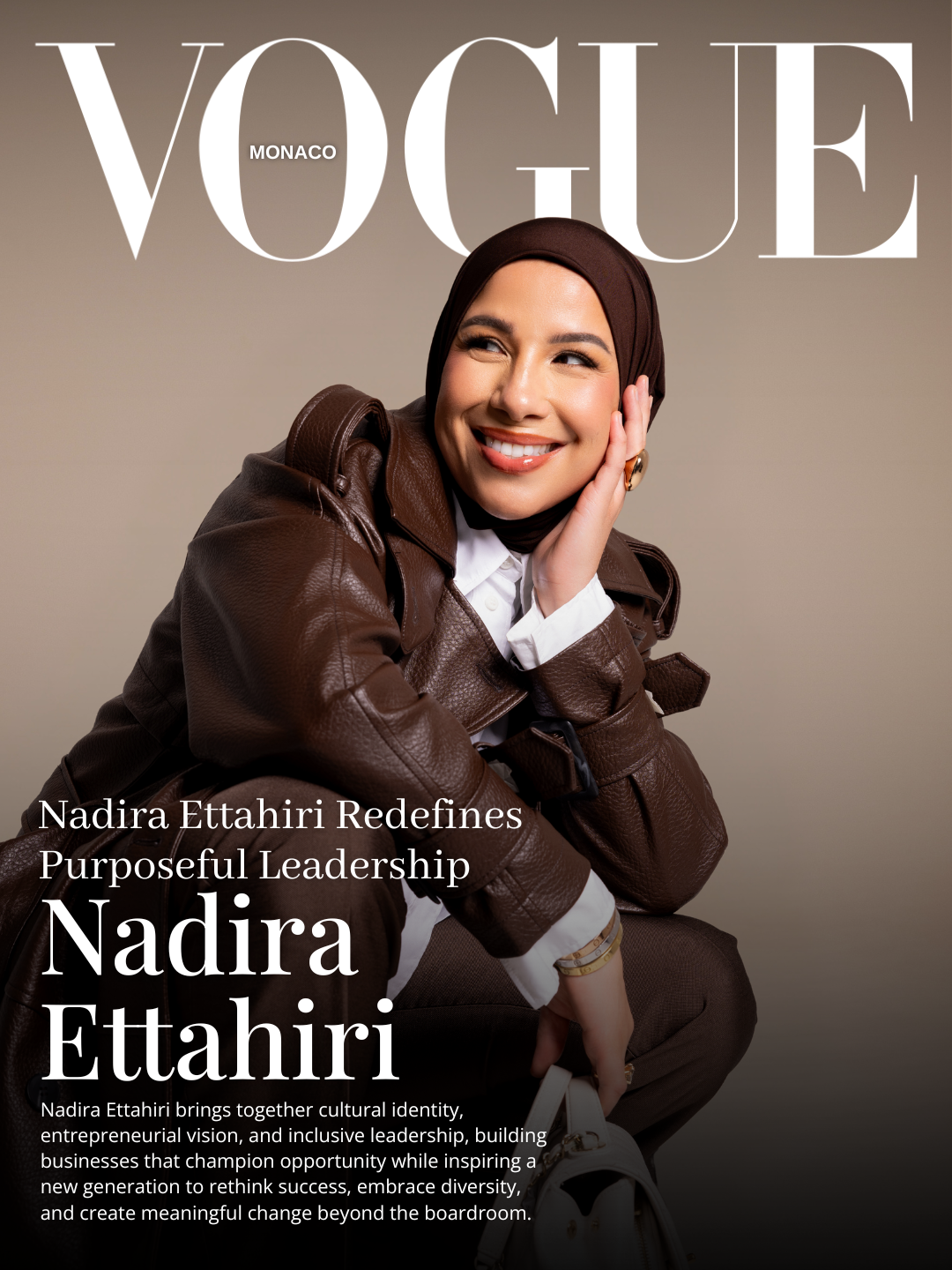
In a world where success is often measured by titles, milestones, and public recognition, Nadira Ettahiri represents a more thoughtful understanding of leadership. For the Dutch-Moroccan entrepreneur, building a meaningful career has never been solely about professional achievement. It has also been about creating opportunities, challenging assumptions, and recognising the potential that exists in people whose talents are not always immediately seen.
With more than two decades of entrepreneurial experience, Ettahiri has developed a professional journey shaped by business, cultural identity, and a commitment to more inclusive workplaces. As the leader behind ABTRO and AVA, organisations focused on reintegration, occupational health, and support for multilingual employees, she has built her career around a challenge that extends far beyond business operations: how can society create systems in which more people are able to participate, contribute, and thrive?
It is a question that increasingly defines her public voice, as she expands her presence into leadership conversations, speaking engagements, and a new personal chapter centred on meaning and wider impact.
A Journey Shaped by Perspective
Every entrepreneurial journey begins somewhere, but the experiences that shape a leader often extend well beyond the boardroom. For Ettahiri, her Dutch-Moroccan background offers an important perspective on identity, belonging, and the different ways people experience opportunity.
Moving between cultural contexts can provide a distinctive understanding of the world. It can reveal how communication shapes relationships, how assumptions influence decisions, and how easily capable individuals can be overlooked when they do not fit conventional expectations.
These themes are reflected in Ettahiri’s professional focus. Through her work with multilingual employees and employers, she operates in an environment where cultural understanding is not simply an abstract ideal. It can directly influence workplace relationships, employee wellbeing, and the possibility of returning to sustainable employment.
Her approach places people at the centre of systems that might otherwise be defined by procedures and administration. Behind every employment challenge is an individual with experience, ambition, responsibilities, and the potential to contribute.
It is this human perspective that gives her work a significance beyond the organisations she leads.
Building Businesses Around Human Potential

Ettahiri’s entrepreneurial experience began in 2003, and her subsequent work has developed around employment, workplace support, and the relationship between organisations and their people.
Through ABTRO, she addresses reintegration and employment support, particularly for people navigating language or cultural barriers. AVA, an occupational health service for multilingual employees, complements this work through services connected to absence management, prevention, and employee recovery.
Together, these organisations address different stages of a challenge that many employers encounter: supporting employees effectively when health, communication, and workplace circumstances become complicated.
The wider significance of this model lies in its recognition that workplace inclusion requires more than good intentions. It also requires practical systems, informed communication, and services that respond to the needs of different individuals.
For employers, this can mean a more considered approach to employee support. For workers, it can mean being understood within a system that might otherwise feel difficult to navigate.
Ettahiri’s work demonstrates how a specialised business can respond to a practical market need while remaining connected to a broader social purpose. Commercial activity and human impact do not have to exist in opposition. When thoughtfully aligned, they can strengthen one another.
The Meaning of Inclusive Leadership
Leadership is frequently associated with authority, visibility, and the ability to make decisions. Yet another dimension is becoming increasingly important: the willingness to question who receives opportunities and whose contributions are recognised.
Ettahiri’s public philosophy places considerable emphasis on multicultural talent, women’s representation, and the barriers that prevent capable people from progressing. Her message is particularly relevant in professional environments where traditional networks and familiar cultural expectations can influence perceptions of competence.
Inclusive leadership, in this context, is not about lowering standards. It is about recognising talent more accurately and ensuring that opportunity is not unnecessarily restricted by background, language, or circumstance.
It also requires organisations to reconsider how they communicate, develop employees, and define professional potential.
For women navigating leadership, these questions can carry an additional dimension. Building a career often involves managing expectations while establishing an individual voice, earning credibility, and deciding what success should mean on personal terms.
Ettahiri’s public advocacy for women and multicultural professionals reflects an understanding that representation matters most when it creates possibilities for others to follow.
The ultimate measure of leadership may therefore be found not only in what an individual achieves, but also in the opportunities that become possible because of that achievement.
Beyond the Boardroom

There is a distinction between building a business and building a public voice. The first requires operational discipline, commercial judgement, and the ability to respond to everyday challenges. The second demands clarity of purpose and the ability to communicate ideas that resonate beyond one’s immediate professional environment.
Ettahiri is increasingly bringing these two dimensions together.
Her personal platform presents an opportunity to discuss the experiences and principles behind her entrepreneurial career, while her speaking and media activities allow her to engage with wider audiences around leadership, diversity, and opportunity.
This evolution reflects a broader shift in contemporary leadership. Increasingly, business figures are expected to explain not only what they build, but why it matters. Their experiences can become part of a larger conversation about the institutions they lead, the people they serve, and the future they hope to influence.
For Ettahiri, this wider conversation creates space to connect practical business experience with questions of identity, belonging, and social mobility.
Her voice is particularly relevant at a time when organisations are reconsidering how they attract talent, support employees, and prepare for increasingly diverse workforces.
Chapter II: A Broader Vision

After more than twenty years in entrepreneurship, Ettahiri has begun describing the next stage of her journey as “Chapter II.”
The phrase suggests a period of reflection and renewed intention. Rather than presenting her future solely as an extension of previous achievements, she has framed this new chapter around meaning, impact, and opening doors for others.
It is a compelling idea because it recognises that professional ambition can evolve. The priorities that guide someone through the early stages of building a business may change with experience, bringing a greater interest in influence, mentorship, collaboration, and the lasting consequences of one’s work.
For Ettahiri, the transition offers an opportunity to bring her business experience and personal perspective into a more visible public conversation.
Her precise long-term plans remain a story still unfolding. What is evident, however, is the growing connection between her established work and the wider ideas she wishes to communicate.
The next chapter is not simply about what comes next professionally. It is also about what she wants her experience to make possible for other people.
Success, Reconsidered

There is an understated confidence in the idea that success should be measured by more than personal advancement. It asks a leader to consider the people who benefit from their decisions, the barriers their work helps remove, and the possibilities they create for those who follow.
For Ettahiri, that perspective connects entrepreneurship with something more enduring than a business milestone. It links professional ambition to the question of access: who is given a chance, who is heard, and who is able to fulfil their potential.
Her work in reintegration and occupational health provides a practical expression of that philosophy. Her growing public platform offers another way to communicate it.
Together, these dimensions form a portrait of a businesswoman whose ambitions extend from the organisations she leads to the broader culture of leadership she hopes to influence.
In an era increasingly concerned with authenticity, representation, and purpose, Ettahiri’s journey offers a reminder that modern leadership is not defined by a single identity or achievement. It is shaped by the ability to bring experience into action, to recognise potential where others might overlook it, and to create opportunities that extend beyond oneself.
For Nadira Ettahiri, the next chapter is an invitation to continue that work with a wider audience and a renewed sense of purpose. And perhaps that is the most meaningful measure of progress: not simply reaching another destination, but helping make the journey more possible for others.