

The founder of Reality Upgrade spent seventeen years in modeling before dedicating her life to consciousness work – and she’s never looked back
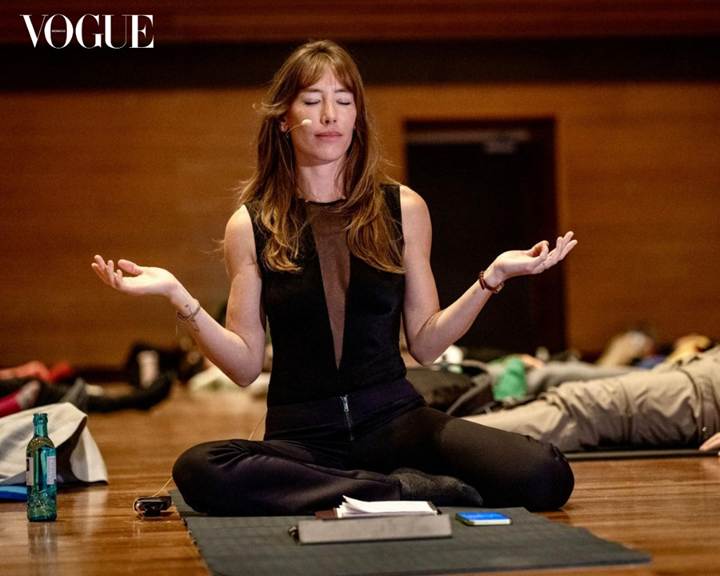
Pia Isabel remembers the exact moment her modeling career stopped mattering. She was sixteen, holding her first magazine cover in her hands, waiting for the rush of validation she’d been told would come. Instead, she felt nothing.
“I held the magazine in my hands and felt exactly the same inside,” she recalls. “That’s when I understood—happiness doesn’t come from external validation.”
That realization became the foundation for everything that followed: seventeen years navigating the fashion industry without losing herself to it, a degree in business psychology, months-long travels through India studying holistic healing, and eventually, the launch of two groundbreaking wellness ventures that have served thousands of participants across three continents.
Today, Isabel is the founder of Reality Upgrade, a global platform offering multi-disciplinary psychedelic retreats and consciousness training programs. With a team of forty operating in the Netherlands, Mexico, and the Caribbean, she has positioned herself at the intersection of ancient wisdom traditions and cutting-edge therapeutic practices—a space that’s rapidly moving from the margins to the mainstream.
But her path to this work was anything but linear.
The Making of a Healer

Isabel’s interest in human transformation began early. Growing up with a father who worked as a prison psychologist, she watched him extend compassion to people society had dismissed. The experience shaped her worldview profoundly.
“I’ve always been drawn to the question of how humans heal,” she says. “Not just psychologically, but existentially.”
By adolescence, she was exploring meditation and altered states of consciousness while simultaneously launching an international modeling career. The contradiction was deliberate. Even as she worked in an industry built on surface-level perfection, Isabel pursued depth—formal education, spiritual practice, and at twenty-two, a prolonged enlightenment experience that lasted several months.
“That’s what solidified my direction,” she explains. “I knew I would dedicate my life to understanding consciousness, universal laws, and human transformation.”
Building Chez Zen—and Nearly Losing Everything

In 2014, Isabel founded Chez Zen, a retreat center in southern France designed to help Western participants reconnect with stillness through silence, tantra, meditation, breathwork, and Ayurveda. Running it as a young single mother, she faced obstacles that had little to do with wellness and everything to do with power.
Local resistance mounted. Professional envy surfaced. Gender bias complicated negotiations. The property owner manipulated legal proceedings in an attempt to seize control of the project.
“I was pushed to discover how deeply I could forgive,” she says. “That’s what kept me from becoming bitter.”
She credits her survival to inner discipline, her daughter, and the teachings of A Course in Miracles. Justice, she insists, is not abstract for her—it’s personal.
The pandemic forced Isabel to sell Chez Zen, but Isabel saw opportunity in this pivot. While living in Spain, she felt a clear internal directive to expand in a new direction. She relocated to Mexico, where naturally occurring entheogens offered a different dimension of healing.
Reality Upgrade was born.
Psychedelics as Medicine

Over the past five years, Reality Upgrade has hosted retreats using an integrative therapeutic model that combines neuroscience, somatic therapy, psychology, and consciousness practices. Isabel also trains psychedelic coaches and speaks publicly about the responsible, holistic use of these substances—a topic gaining legitimacy as research institutions and regulatory bodies reconsider decades of prohibition.
She insists on experiential integrity. Every modality included in her programs is personally tested, evaluated with experts, and refined through direct observation of outcomes.
“People rediscover their will to live,” she says. “They leave toxic relationships without struggle. They change careers not out of fear, but alignment.”
Inside Reality Upgrade, hierarchy is intentionally minimized. Team members are encouraged to show up authentically, and leadership roles rotate. Isabel describes the culture as “a family without rank,” where humor, honesty, and growth coexist.
Ego conflicts arise—but she views them as productive. Some team members step away, do personal work, and return stronger. Others grow through participation in the retreats themselves.
The Future of Wellness

Looking ahead, Isabel predicts psychedelics will be legalized for therapeutic use in the United States within the next decade. She also believes virtual reality and AI coaching will become standard tools, and longevity will shift from luxury to expectation.
What will matter most, she says, is discernment—the ability to distinguish genuine transformation from wellness theater.
When asked about influences, Isabel points less to specific teachers than to direct encounters with what she calls the governing principles of the universe. If pressed, she names Osho and Eckhart Tolle, but insists her understanding comes from lived reality, not doctrine.
Outside of work, she grounds herself through movement: dancing, painting, time in nature, bodywork, and disciplined wellness routines.
Advice for Women Building Purpose-Driven Paths
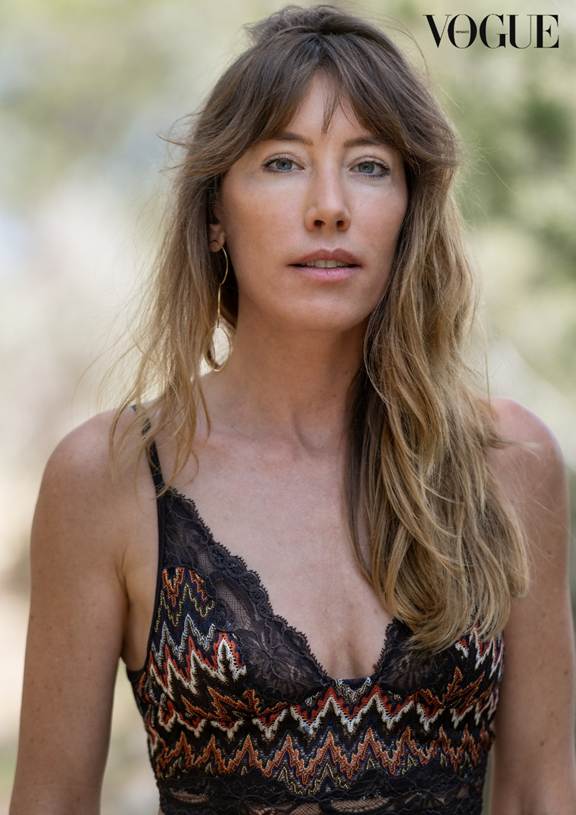
Isabel’s advice to women pursuing transformative work is direct and unapologetic.
“Women need to reconcile with each other,” she says. “Without solidarity, we stand alone.”
She speaks openly about power imbalances, professional boundary violations, and inherited wounds—especially those passed through female relationships. Healing them, she believes, is essential to reclaiming instinct and strength.
She encourages women to explore embodied practices that release stored emotional tension and restore vitality. “Once that energy is freed,” she says, “you become unstoppable.”
Integration, Not Escape
Isabel’s journey is not one of escape, but of integration. From altered states to grounded leadership, from resistance to resolve, her work reflects a central truth she lives by: transformation is not about avoiding pain—it’s about learning how to move through it without losing yourself. As psychedelic therapy moves toward mainstream acceptance and wellness culture grapples with questions of authenticity, Isabel’s model offers a blueprint—one built not on trends, but on decades of personal practice, hard-won resilience, and an unwavering commitment to helping others find their way